Two people can look perfect together on paper and still have nothing to say to each other. Two others can share almost nothing on paper and talk until 2 a.m. So which one matters: compatibility or chemistry?
Short answer: both, in a specific order. Compatibility is how you decide who is worth meeting. Chemistry is what you find out once you do.
What compatibility actually tells you
Compatibility is the stuff that can be known before you meet: how you see the world, how you handle stress, whether you need plans or spontaneity, what you want from the next year. It is the shortlist. It cannot promise a spark, but it can remove a lot of obvious mismatches early, and that saves everybody time.
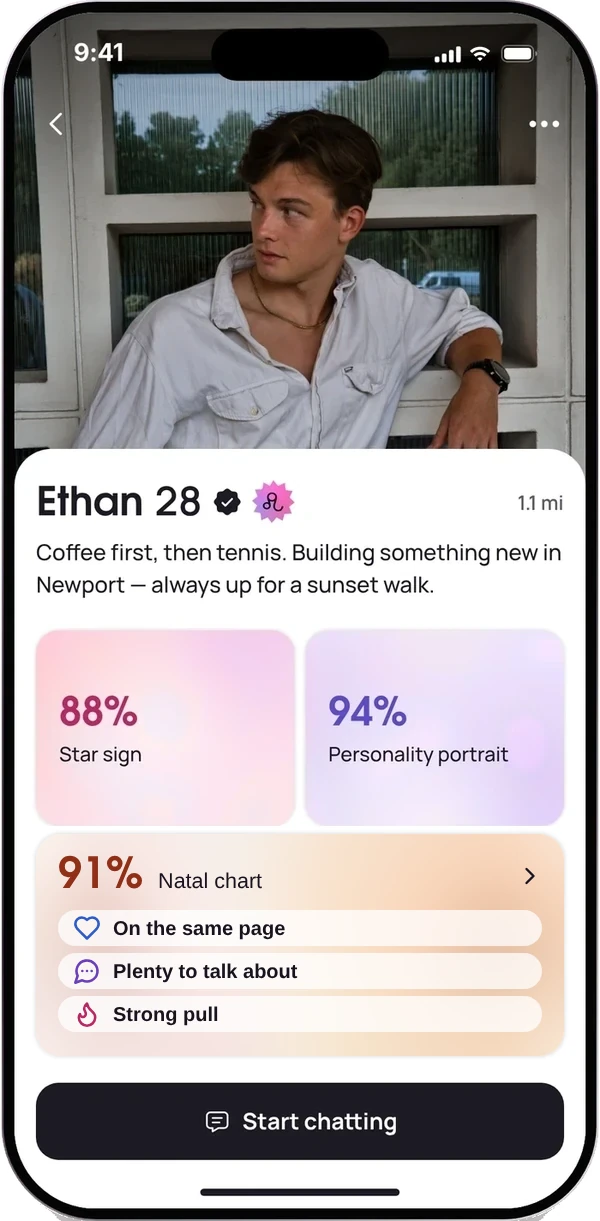
In Whispa, compatibility is read on three layers: your star signs, your personality portrait from the short test, and your natal charts. Think of it as a friendly filter that says “these people are likely to get you,” not a verdict.
What chemistry is, and why you can’t score it
Chemistry is the live part: the timing of a joke, how easy the silence feels, whether you want to keep talking. It only exists between two specific people in a specific conversation, so no profile can fully show it.
Researchers have tried. In a 2017 study, psychologist Samantha Joel and colleagues used machine learning on data from speed-dating events to see whether romantic desire could be predicted from what people said about themselves beforehand. The models could say something about who tends to be liked, and who tends to like others. But they were much weaker at predicting the unique spark between two particular people, the part that appeared only after they met.
That does not make compatibility pointless. It means the best a profile can do is get you to the right conversation. The rest happens in the conversation.
Why the order matters
Most apps flip it. They ask you to decide on chemistry first, from a photo and two lines, and then hope compatibility works out. That is how you end up swiping on cheekbones and finding out three weeks later that you want completely different lives.
A better order looks like this:
- Compatibility first. Narrow down to people who are likely to fit.
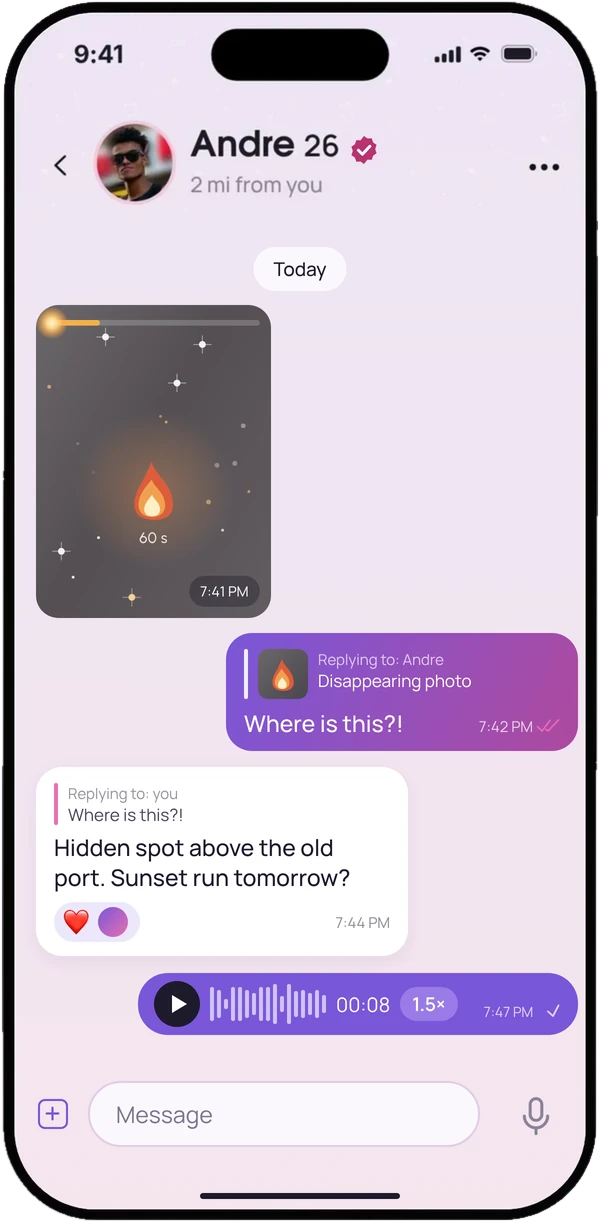
- Conversation second. Say hello and see what happens. This is where chemistry gets its chance.
- Meeting third. If the talking feels good, meet.
This is also why Whispa lets you write first. If the score is high, you should not have to wait for a mutual like to find out whether the chemistry is there.
How to use both without overthinking
- Treat a high score as an invitation, not a promise. It says “this could be good,” and the conversation says whether it is.
- Give it three messages. Chemistry rarely shows in one line. Ask something real, answer something real, see how it feels.
- Use the “Start with” hint. It is built from what the two of you share, so the first message already has something to stand on.
- Trust the feeling, not only the number. If a 92% feels flat and an 84% makes you laugh, listen to the laugh.
Compatibility gets you to the right door. Chemistry is what happens when you walk through it.
Source: Joel, S., Eastwick, P. W., & Finkel, E. J. (2017). Is romantic desire predictable? Machine learning applied to initial romantic attraction. Psychological Science, 28(10), 1478–1489.