You and someone else were both born at a specific moment, in a specific place. Put those two moments side by side and astrologers have a name for what they study: synastry. It is the oldest form of “compatibility check” there is, and it is a lot more detailed than “Leo and Sagittarius get along.”
Here is how it works, in plain language.
Your star sign is only one piece
Most people know their sun sign, the sign the Sun was in on the day they were born. It changes roughly once a month, so millions of people share it. That is why sun-sign compatibility is broad: it describes a general temperament, not a person.
A natal chart (or birth chart) is a map of where the Sun, the Moon and the planets were at the exact minute and place you were born. To build one you need three things: your date of birth, your time of birth and your city of birth. The time matters more than people expect. The Moon moves through a whole sign in about two and a half days, and your rising sign changes roughly every two hours.
What synastry actually compares
In synastry, an astrologer lays one person’s chart over the other’s and looks at the angles between their planets. Those angles are called aspects. A few are read as easy and flowing, a few as tense and electric:
- Conjunction (0°): two planets in the same spot. Intense, merging energy.
- Trine (120°) and sextile (60°): easy, natural harmony.
- Square (90°) and opposition (180°): friction, attraction, growth through challenge.
Not every planet carries the same weight. When people talk about romantic or close-friend chemistry, these pairings come up most:
- Sun and Moon: how your core self meets their emotional needs. A classic sign of feeling “at home” with someone.
- Venus and Mars: attraction, affection and how you go after what you want.
- Mercury: how you talk, argue and make plans. Great Mercury contacts often show up as conversations that never run dry.
- Moon and Moon: emotional rhythm. Do you recharge the same way?
A chart with many tense aspects is not a “bad match.” Astrologers often say the most magnetic connections have both: enough harmony to feel easy, enough tension to keep things interesting.
How a compatibility score turns this into a number
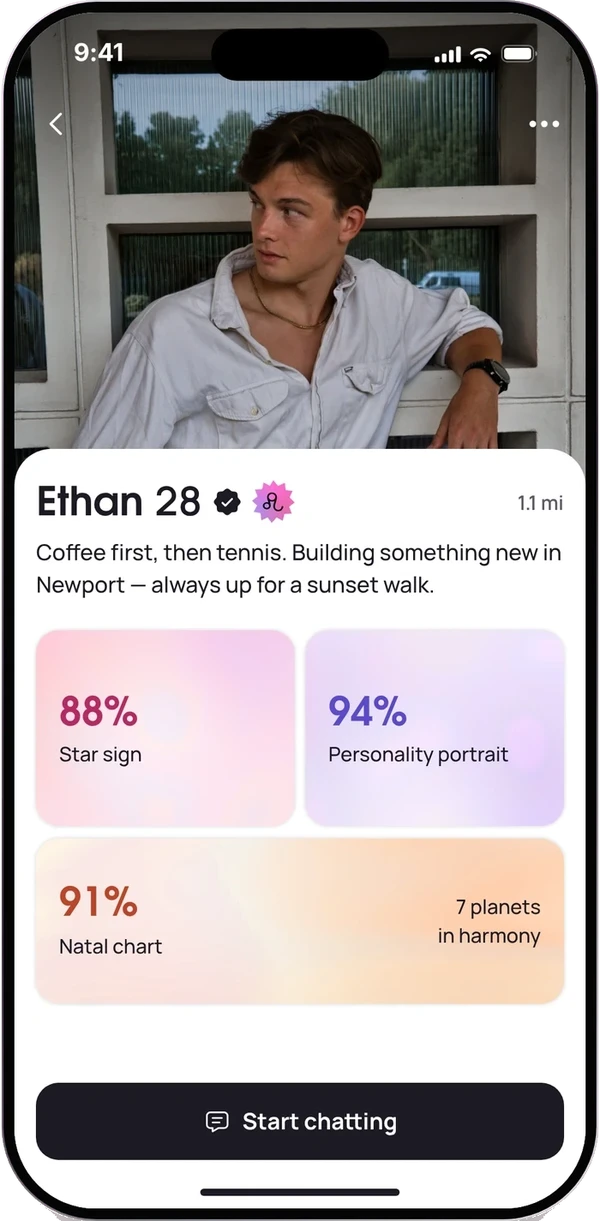
A full synastry reading can run for pages. An app has to compress it into something you can read in a few seconds. In Whispa, the natal chart layer counts how many planets interact in a meaningful way and how harmonious those interactions are, then turns that into a percentage. You might see something like 91% natal chart, 7 planets in harmony.
That number sits next to two other layers:
- Star sign: the classic sign-to-sign compatibility most people already know.
- Personality portrait: a short test about how you see life, what drives you and how you connect. It works for people who don’t care about astrology at all.
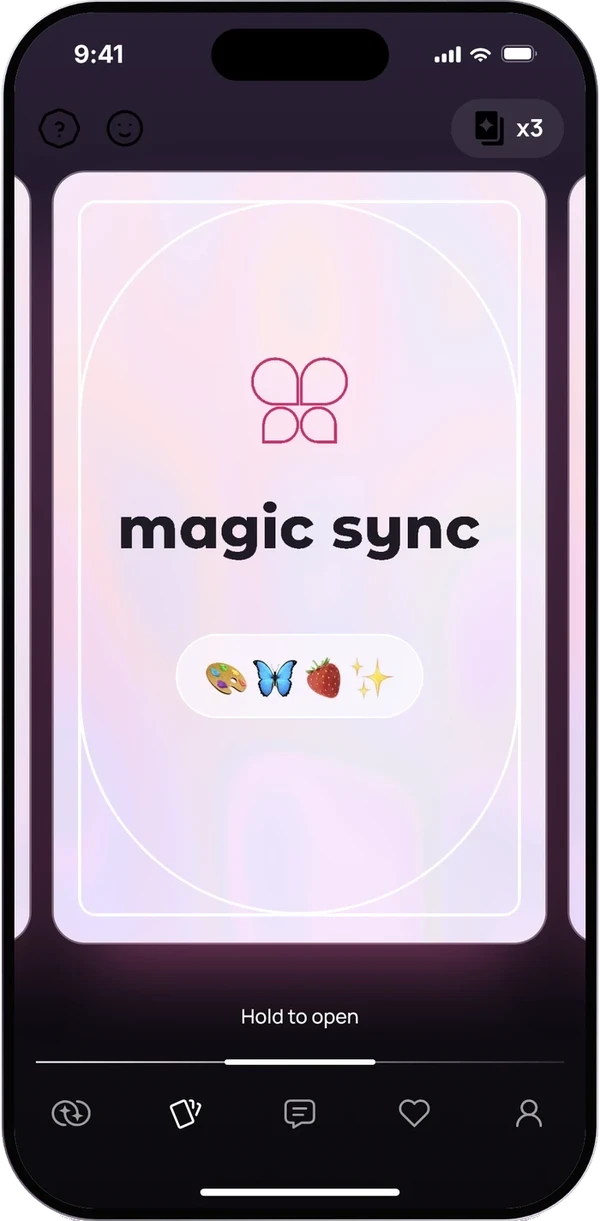
Tap any of the three and you get a written reading of what it means for the two of you, plus a “Start with” hint: an easy first line built from what you have in common.
How to read a high (or low) score
Treat compatibility as a strong hint, not a verdict.
- A high score is a good reason to say hello. It means there is a lot of natural common ground, so the first conversation tends to be easier.
- A low score doesn’t rule anything out. Plenty of great friendships and relationships look “wrong” on paper. That’s why Discovery in Whispa stays open: you can always browse and choose freely.
- Your answers shape your matches. An accurate birth time and honest test answers give you far better results than guesses.
Try it with someone you already know
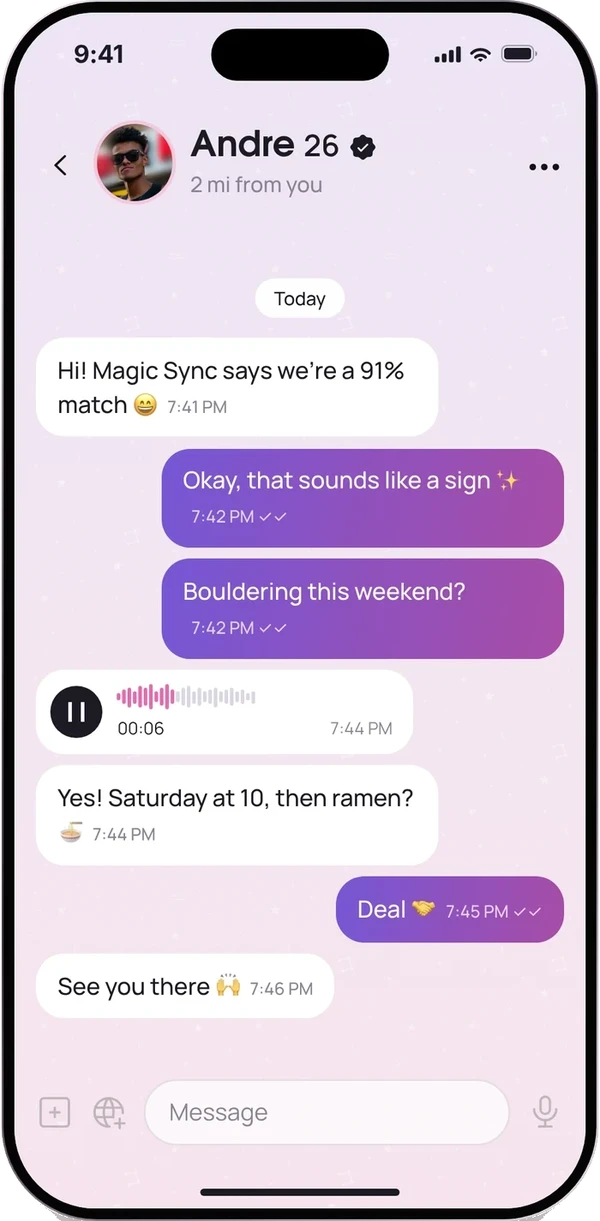
The fastest way to see whether synastry clicks for you is to test it on a relationship you understand: your best friend, your partner, your sibling. In Whispa you can send a “Check your compatibility” link. When they sign up, you both see your scores on all three layers, with the readings.
You might be surprised by how much the chart already knew.